| Knowledge Area | Initiating | Planning | Executing | Monitoring & Controlling | Closing |
| Time Management | Plan schedule mgmt., Define activities, Sequence, Estimate duration, resources. Develop schedule | Control Schedule |
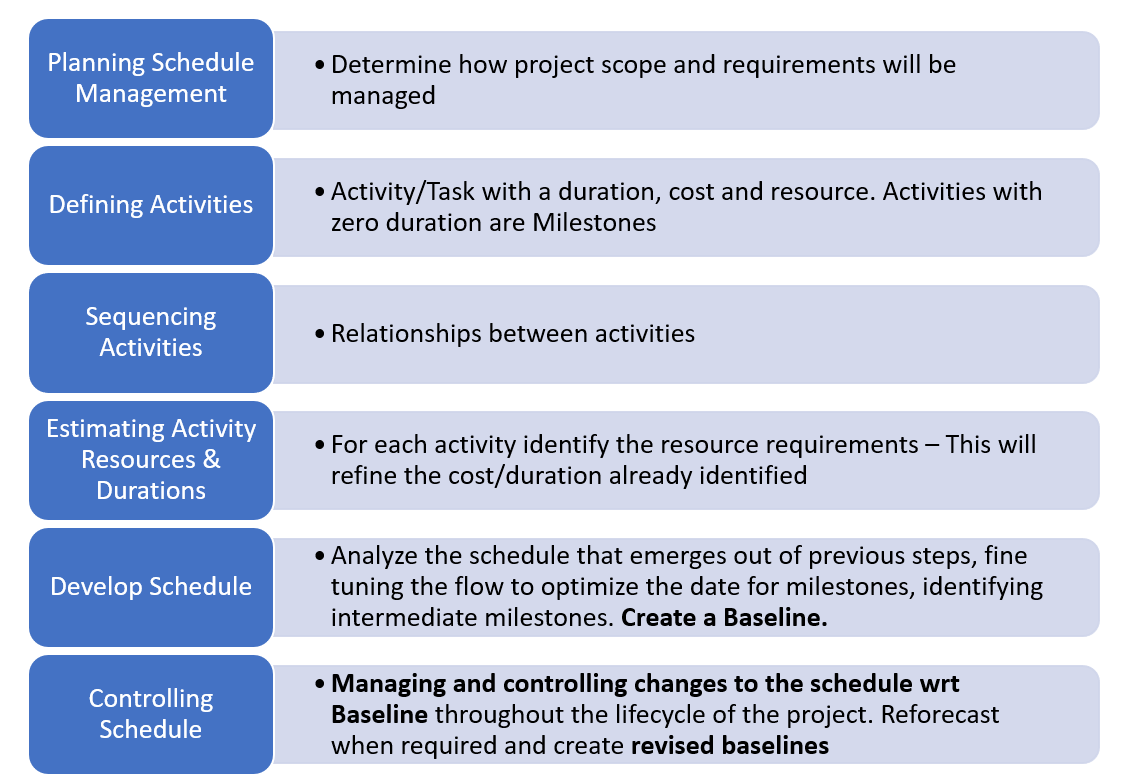
Project Dependencies
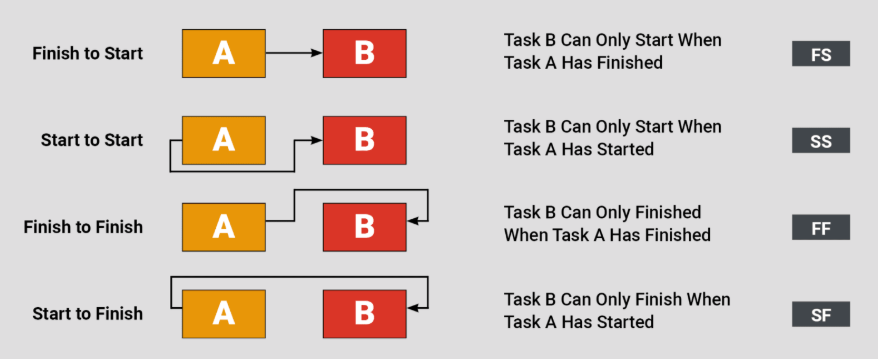
Think of examples for each of the above dependencies.
Earned Value Management (EVM)
EVM is a good approach to track cost and schedule in a project. It is elaborated in Earned Value Management.
Sequencing – Critical Path Analysis
Critical Path: It is that path (series of activities) that determines the earliest time by which the project can be completed. A delay in any of the activities in the critical path will delay the project.
Determination of Critical Path
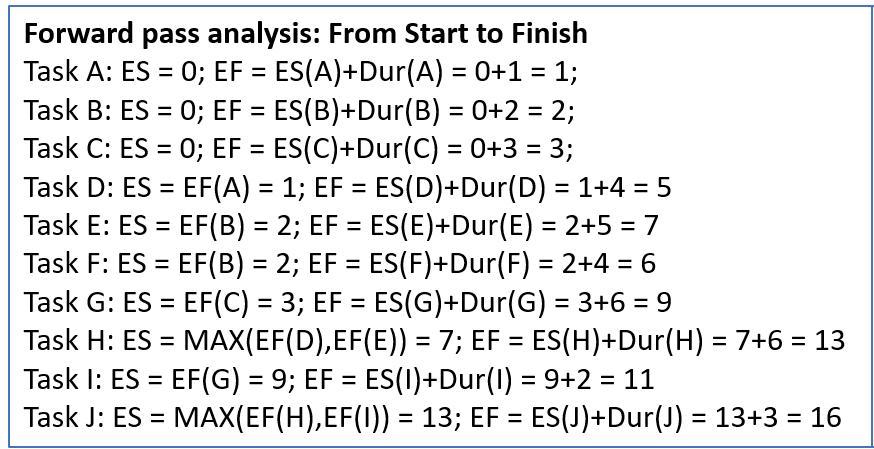
- Forward pass analysis: From Start to Finish
Early Start Time: The ES is the maximum EF of all predecessors, except for the first task where the ES=0.
Early Finish Time: The EF time is the ES time plus the duration (EF=ES+Duration).
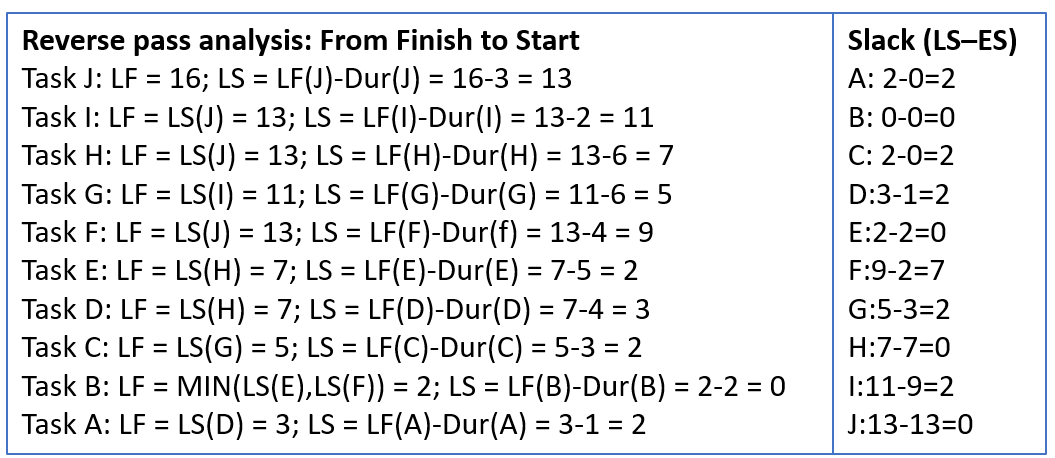
- Reverse pass analysis: From Finish to Start
Late Finish Time: The LF time is the minimum LS of all the successors, except for the last task where LF equals EF.
Late Start Time: The LS time is calculated as the LF time minus the duration (LS=LF-Duration).
Slack Time: The Slack time is calculated as LF minus EF. It can also be calculated as LS minus ES.
For any task, if the slack is zero, then the task is on the critical path.
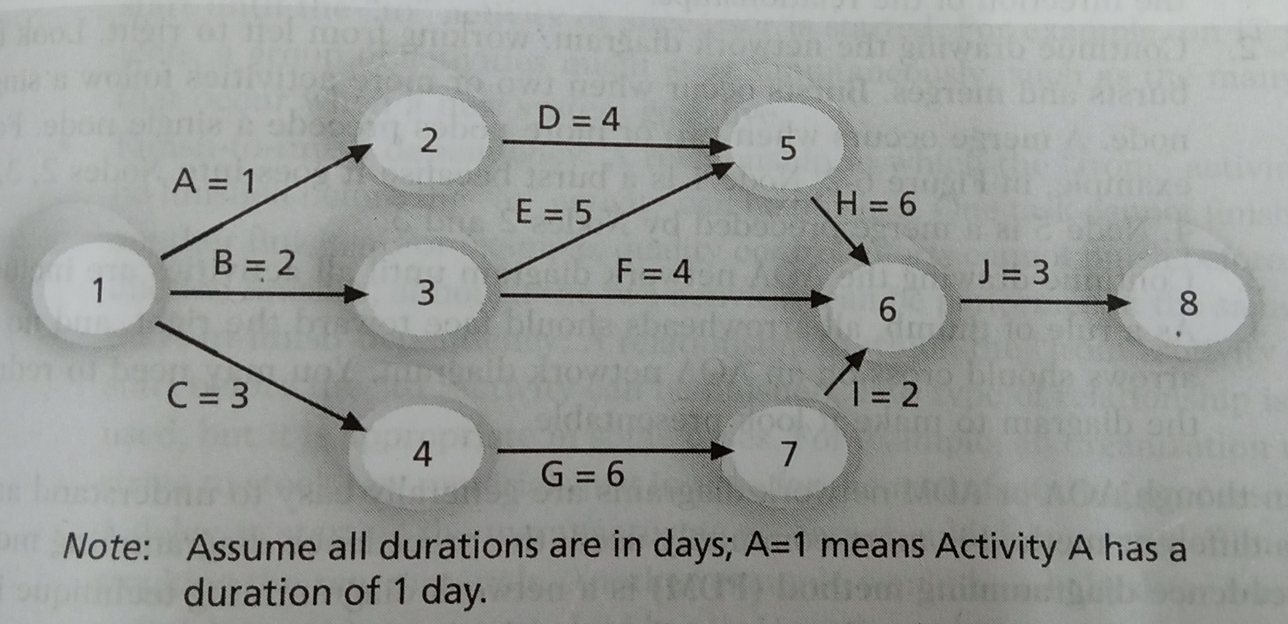
Activity: Determine the critical path for below network of tasks
Project activities and durations are depicted on the Arrows in the below picture. Assume Project starts on Date ‘T0’. Analyze and find out the following: Earliest Start Date (ES), Earliest Finish Date (EF), Latest Start Date (LS), Latest Finish Date (LF) and Slack for each of the activities and for the full project.
Solution
Program Evaluation and Review Technique (PERT) Formula
Estimated Duration = (Optimistic Time + 4 * Most Likely Time + Pessimistic Time)/6
References
Schwalbe, K. (2016). Information technology project management. Cengage Learning.
 Dr. Selvaraj Vadivelu