IT Project Context
- Projects could be for Internal stakeholders (Internal Organization) or for External stakeholders (External Customer Organization)
- While IT projects involve information systems including both hardware and software, the projects could be for enterprise IT (or) projects that contribute to Product development.
- IT projects could be for Business purpose or for Not-for-profit cause
Reflect on the difference between Project Management and Product Management
Software Industry context

Ref: Popp, K. (2011). Software Industry Business Models. IEEE software, 28(4).
Organization context

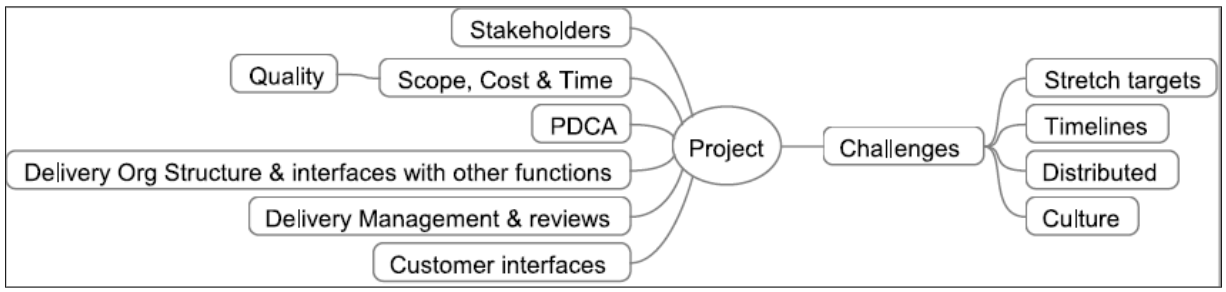
Project Context and Challenges
Scope Management & Estimation related challenges (in projects with fixed pricing or hybrid pricing models)
- Evolving requirements
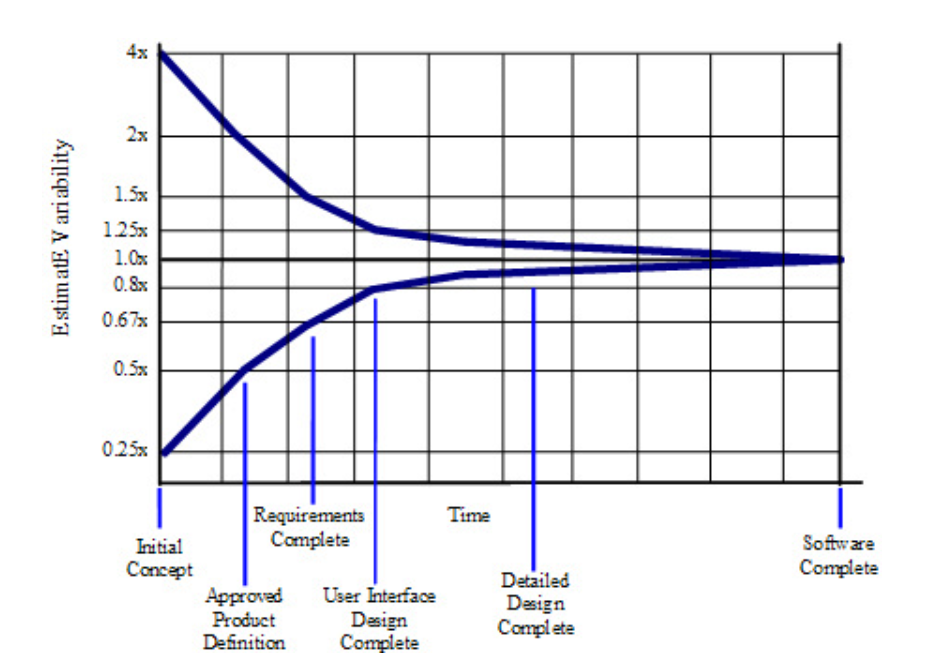
- Cone of uncertainty: This refers to the uncertainty in the estimation at different phases of the project.
Pricing Models related challenges
- Fixed Price but evolving requirements
- Time and Material (TNM) pricing: Customers typically have productivity concerns. The total budget for the Product Development is not clear to customer.
Execution Models related challenges
- Ongoing projects across multiple product lines create challenges in execution – team members have to work across multiple variants of the code bases.
- Sustenance projects require Offshore Development Centre (ODC) execution model. This comes with need for additional cost and planning. But the benefit is longer engagement with customers.
Project planning related challenges
- IT projects have higher uncertainties in scope. This is also coupled with cost estimation challenges in IT projects as it is difficult to estimate effort required for knowledge intensive activities like software development.
Execution, Monitoring & Control related challenges
- Earned Value Management (EVM): While EVM is a great method to track and manage projects, it relies on the assessment of the percentage of work completed. In the case of IT projects, it is difficult to assess the percentage of work completed. (Reflect why this is difficult)
- Product Quality challenges: Working product with evolving quality criteria. Lack of adaptive prioritization
Closure related challenges
- Closure of fixed price projects: Depends on the acceptance criteria definition, agreement and successful demonstration of meeting the acceptance criteria. It poses challenges in revenue recognition as well and the closure – due to long duration of the project between milestones and scope changes happening in between.
 Dr. Selvaraj Vadivelu