Stakeholder: An individual or a group that a business analyst is likely to interact with directly or indirectly. Any stakeholder can be a source of requirements, assumptions, or constraints. They provide funds, expertise, identify risks, and enable buy-in/acceptance.
Identification and Analysis of Stakeholders
Stakeholders are identified and analyzed during the Project Initiation phase. The list will be continuously reviewed and revised on an ongoing basis.
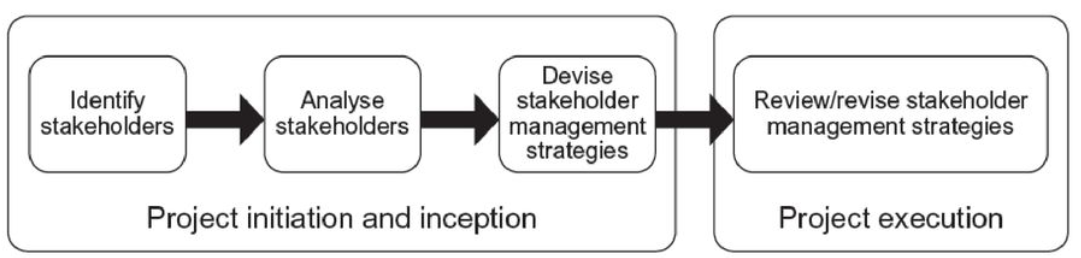
Stakeholder Categories

Source: Paul, D., Cadle, J., & Yeates, D. (Eds.). (2014). Business analysis. BCS, The Chartered Institute for IT.
Typical stakeholders and a brief description
sponsor: responsible for initiating the effort to define a business need and develop a solution that meets that need
customer: uses or may use products or services
end user: can include all participants in a business process, or who use the product or solution
supplier: provide products or services to the organization and may have contractual or moral rights and obligations
business analyst
regulator: responsible for the definition and enforcement of standards.
project manager: responsible for managing the work required to deliver a solution that meets a business need, and for ensuring that the project’s objectives are met while balancing the project factors including scope, budget, schedule, resources, quality, and risk.
domain subject matter expert: person with in-depth knowledge of a topic relevant to the business need or solution scope.
implementation subject matter expert: has specialized knowledge regarding the implementation of one or more solution components. E.g. information architect, usability analyst..
tester: responsible for determining how to verify that the solution meets the requirements defined by the business analyst, as well as conducting the verification process
operational support: responsible for the day-to-day management and maintenance of a system or product. E.g. Release Mgr
Approach to Stakeholder Identification:
- Analyze the project documentation. Look for people, groups, departments, customers, and project team members affected by the project.
- Brainstorm with team to any others
- Make a stakeholder list. Covers stakeholders’ sign-off authority, and their stake.
- RACI and RASCI Matrix: This stands for: R – Responsible; A – Accountable; S – Support; C – Consult; I -Inform. For each of the stakeholder (or) stakeholder categories, identify their role in terms of RACI or RASCI matrix. This will establish clarity.
Stakeholder Management Strategies
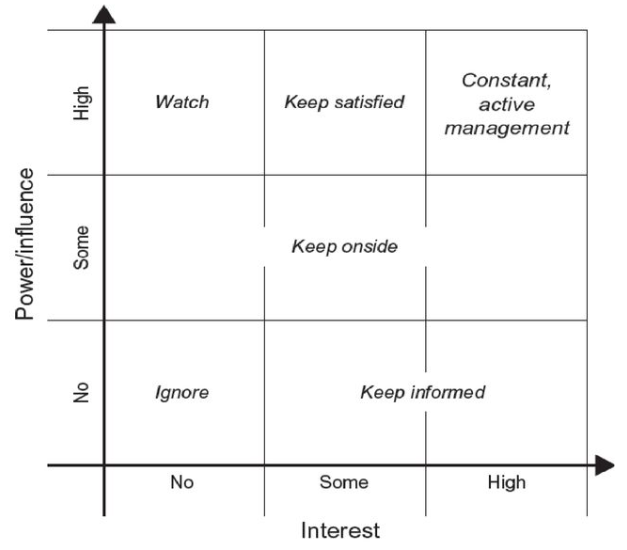
Source: Paul, D., Cadle, J., & Yeates, D. (Eds.). (2014). Business analysis. BCS, The Chartered Institute for IT.
Activity: IT Consulting Project – Stakeholder Identification & Management
Project Title: Digital Transformation for AlphaBank
Background:
AlphaBank, a mid-sized financial institution, is undergoing a digital transformation to improve customer experience and operational efficiency. They have hired an IT consulting firm, TechSolutions Inc., to develop a new mobile banking application and upgrade their core banking system.
Project Scope:
- Develop a secure and user-friendly mobile banking application.
- Integrate the app with AlphaBank’s existing core banking system.
- Ensure regulatory compliance with financial industry standards.
- Provide training and support to AlphaBank employees.
Challenges:
- Resistance to change from employees.
- Stringent regulatory requirements.
- Tight project timeline and budget constraints.
Exercises
- Stakeholder Identification: List the key stakeholders involved in this project. Consider internal and external stakeholders, including decision-makers, influencers, and end-users. Map each of the stakeholders to RASCI matrix.
- Stakeholder Analysis: Categorize stakeholders based on their level of influence and interest in the project.
- Stakeholder Management Strategy: Suggest ways to engage and communicate with different stakeholders to ensure project success.
 Dr. Selvaraj Vadivelu