Skills required for any management professional
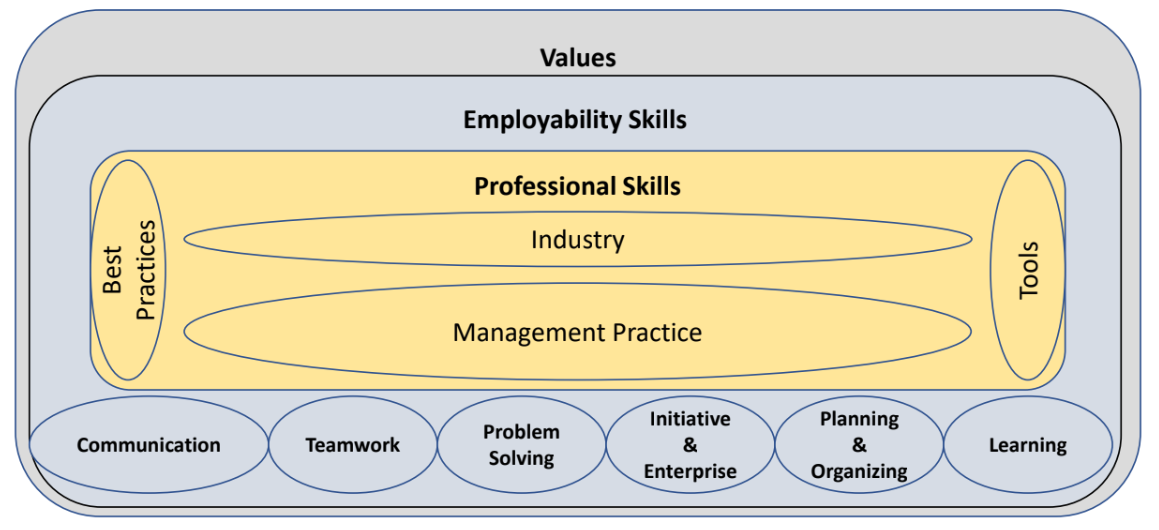
Skills required for Consulting
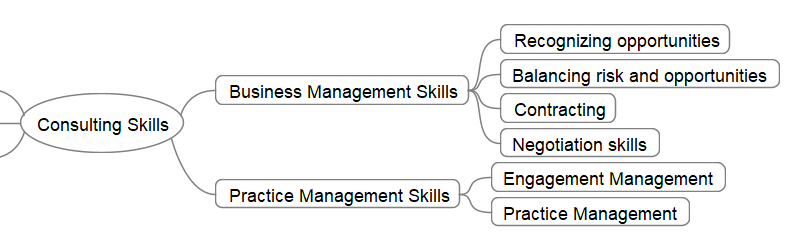
The skills required for Consulting are shown through the mindmap below. It is to be noted that in the below figures, proficiency in relevant tools and techniques are implied in each of the skills. (Ref: Chapter 8: Sanjiva Shankar Dubey (2012). Management and IT Consultancy)
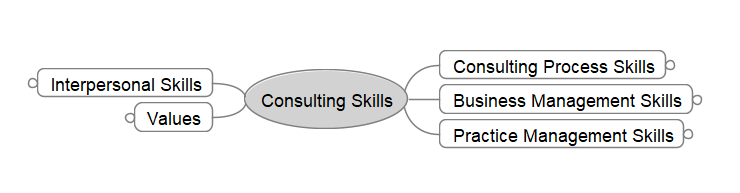
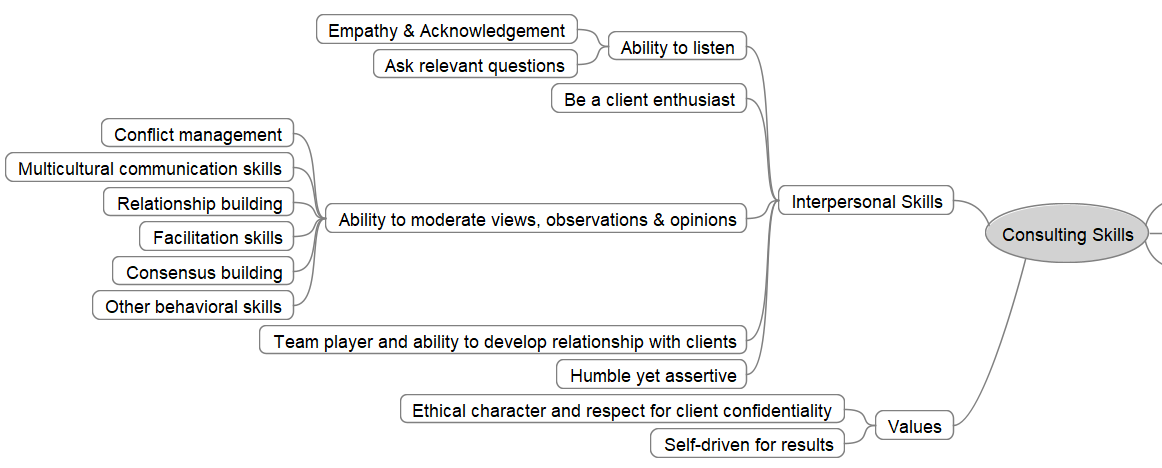
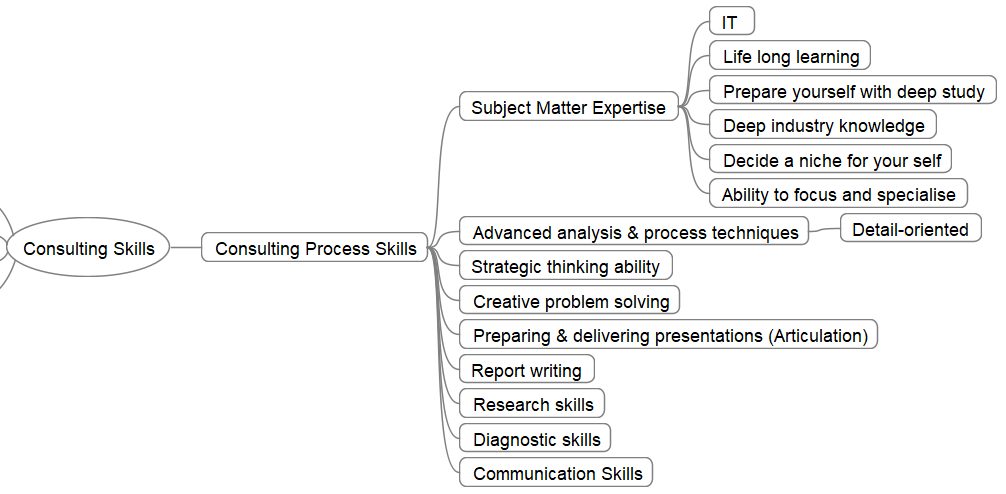
The above mindmap is expanded in the figures below.
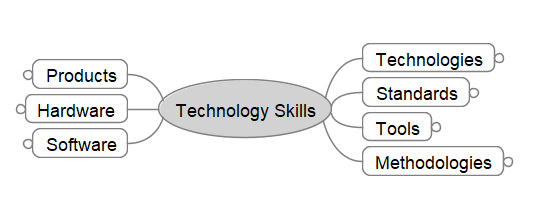
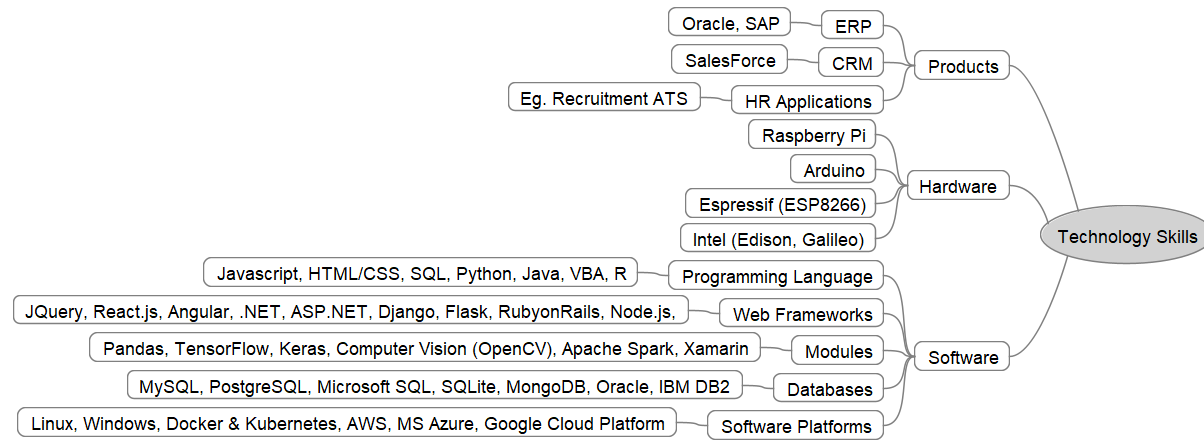
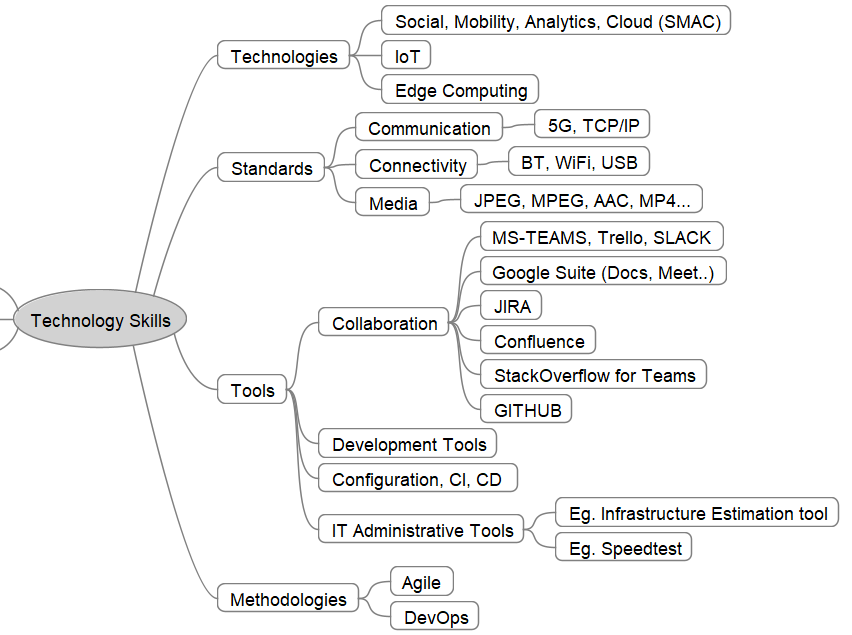
Technology Skills Taxonomy
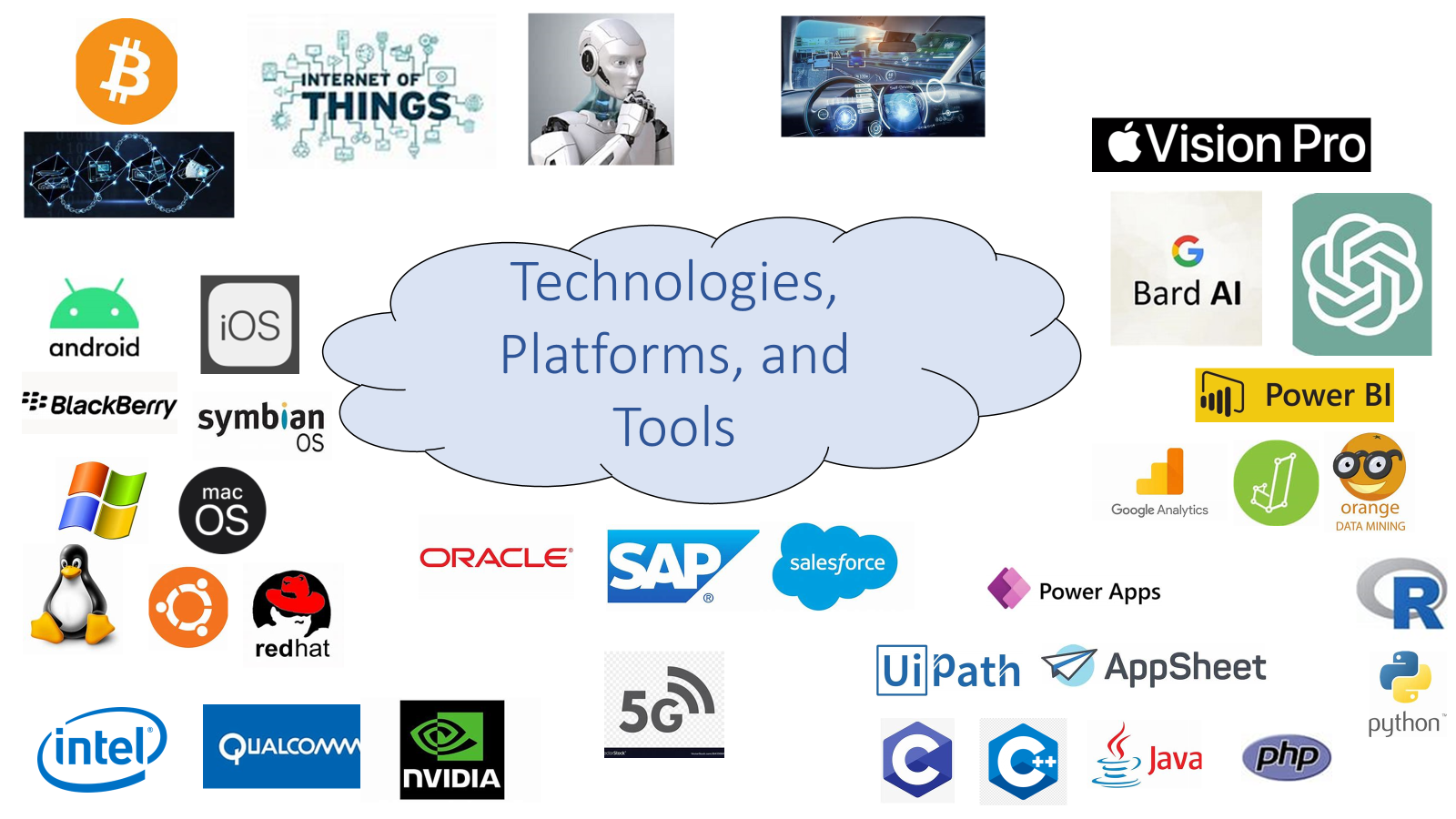
While listing out the skills required for consulting, it was clear that there is an element of Subject Matter Expertise for all consultants. In the case of IT Consulting (or) Tech Consulting, the technology skills (ability to understand the potential of the technology, the business use case scenarios where the technology can be applied) become the center of this Subject Matter Expertise. Though Technology skills is critical for IT Consulting, it is shown below that the technology skills can be broken down into various dimensions and comprehended with the emphasis on business use case scenarios. This also puts to rest the question whether, a formal education in IT or Engineering is required. The need is only an inquisitive and open mind to ask the right questions, take efforts to understand and train the mind to apply technology in various scenarios.
It is to be noted that the technology skill dimensions and the examples given are only illustrative and definitely not exhaustive.
Business IT Consulting (Role-Skill Mapping)
As discussed in previous sections of these notes, IT consulting is a mix Business and IT consulting (BIT). The below picture illustrates the nature of activities involved and the corresponding roles. The BIT consultants spread is shown to be very less in IT Implementation phase and emphasis is on the other phases as expected.

Skill Development and Certification
Skill development is typically through a mix of formal degree/diploma programs, certification courses and dedicated corporate trainings. Certifications in applicable Standards, Methodologies and Tools would be an advantage. But caution should be exercised in choosing these certifications carefully considering the career path for the consultant, the opportunities for growth in career with the specific certification and the investment required. Organizations also need to carefully consider these aspects and invest in training their employees.
Recommended Activities
- Consider the following scenarios and come up with solution approaches:
- Consulting engagements are always challenging as the situation, expectation and specifics are most of the times new. How should a consultant survive in this?
- Client is unhappy with the assigned consultant’s proficiency/capability. What should the lead consultant or Partner do?
- While providing consulting services to a client on Engineering Team’s performance benchmarking and recommendations, the consultant did a mid-term draft presentation of the findings and recommendations. The Engineering managers are not open to the recommendations. They go on to oversimplify the problem and say that the recommendations are too complex. How should the consultant go about in this situation.
- Visit career portals of consulting firms or job portals and for specific roles, find out what are the skills asked for. Compare with those mentioned in these notes and identify any skill that was missed out. Do note that domain/function specific skills for particular roles are not identified in these notes. Hence, you will find those gaps.
 Dr. Selvaraj Vadivelu