Digitization
The technical process of converting analog information into digital formats. Digitization encodes or shifts analog tasks and information into a digital format so that computers can store, process, or transmit information without altering value-creating activities.
The focus is on Data conversion and representation.
Examples:
- Scanning paper documents into PDFs.
- Converting vinyl records into MP3 files.
- Installing sensors on mechanical equipment to collect digital data.
Digitalization
Digitalization is the use of digital technologies to optimize business processes and models, enabling innovation, efficiency, data-driven decisions, and greater value creation for customers.
Focus is on Organizational and societal change through digital tools.
Examples:
- Using CRM software to manage customer relationships.
- Implementing e-learning platforms in universities.
- Transitioning from cash registers to cloud-based POS systems.
Digital Transformation
Digital Transformation is the integration of digital technologies into a company’s operations and processes, driving changes in business models, performance, collaboration, and culture both internally and externally. It is a strategic and holistic change in an organization enabled by digital technologies, involving reconfiguration of processes, structures, and culture. Through Digital Transformation, organizations seek to offer a product and/or service through new digital formats.
Focus is on Strategic innovation and organizational evolution.
Potential contributions of DT in a company:
- optimization of physical and digital resources;
- increased competitive advantage;
- improved value delivered to the customer; and
- cost reduction
Examples:
- A traditional bank becoming a digital-first financial services provider.
- A manufacturing firm adopting Industry 4.0 with AI, IoT, and robotics.
- A university redesigning its curriculum and operations around digital-first pedagogy and administration.
Five Domains of Strategy Impacted by Digital Technologies
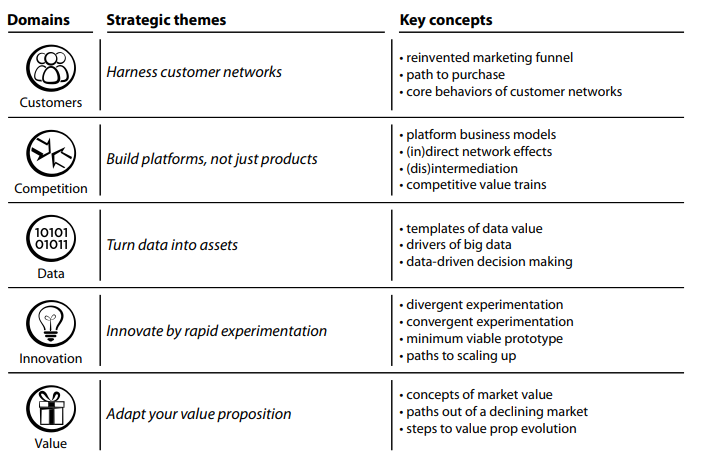
Digital forces are reshaping five key domains of strategy ie customers, competition, data, innovation, and value. These five domains describe the landscape of digital transformation for business today.
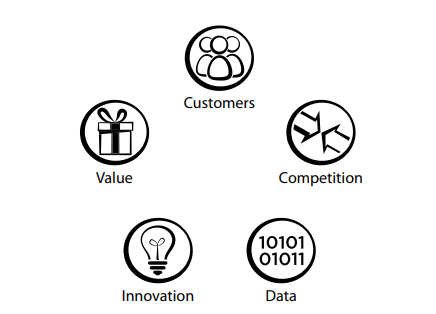
Digital technologies are reshaping how we engage with and deliver value to customers. The interaction is now two-way, where customer feedback and reviews carry more influence than advertisements or celebrities, making their active involvement a vital factor in business success.
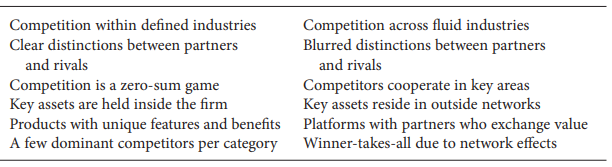
Digital technologies are reshaping our perspective on competition. We now face rivals not only within our own industry but also from other industries offering disruptive digital solutions that attract our customers. In some cases, we may battle a long-standing competitor in one area while simultaneously collaborating with them in another. More often, our competitive strengths lie not solely within the organization but within networks of partners connected through more flexible business relationships.
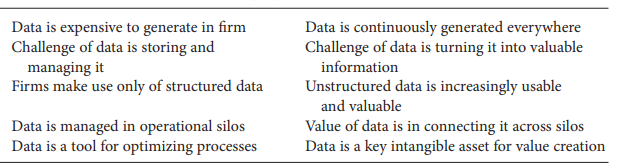
Digital technologies have most profoundly transformed how we view data. In the past, data was costly to collect, hard to store, and confined within organizational silos, requiring large IT systems for management. Today, data is being produced at an unprecedented scale by individuals and organizations alike, while cloud-based storage solutions are inexpensive, accessible, and simple to use. The key challenge now lies in converting this vast data into meaningful insights.
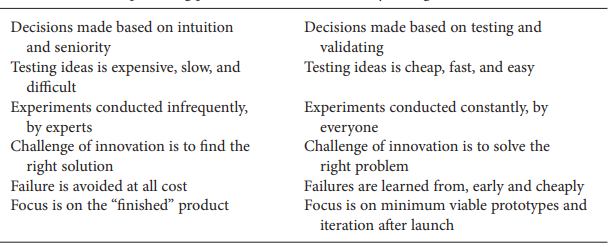
Digital technologies are reshaping how businesses approach innovation. In the past, innovation was costly and risky, with limited ability to test ideas, forcing managers to make assumptions about what to include in products before launch. Today, continuous testing and experimentation are possible, with prototypes created easily and ideas quickly validated through user communities. Ongoing learning and rapid product iteration, both before and after launch, have now become standard practice.
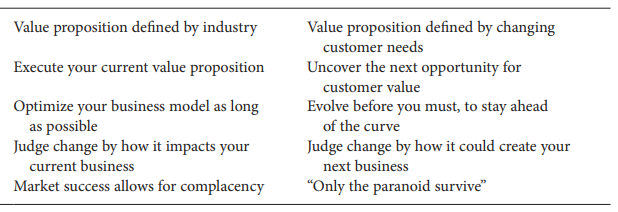
The digital era demands a fundamental shift in how we approach customer value. In this dynamic landscape, customer preferences evolve rapidly while competitors constantly innovate. Therefore, complacency is a significant risk. As Andy Grove noted, survival in the digital age requires constant vigilance. Proactively and relentlessly identifying new sources of customer value is no longer an option, but a business imperative.
Strategic Assumptions: The changes required in Digital Era
Customers

Competition
Data
Innovation
Value
Strategic Themes and Concepts in each of the Domains of Digital Strategy
Tools for Digital Transformation
Customer Network Strategy Generator: is designed to help you develop new strategic ideas for engaging and creating value with networked customers. It does this by linking your own business objectives to the core behaviors of customer networks. It can be used to generate new marketing communications and customer experiences as well as new product and service innovations.
Platform Business Model Map: is an analytic and visualization tool designed to identify all the critical parties in a platform and analyze where value creation and exchange take place among the different customers and with the platform business itself
Competitive Value Train: is a tool to analyze competition and leverage between a firm and its business partners, direct rivals, and asymmetric competitors. It focuses on competition by looking at the leverage between the companies in a supply chain & their potential substitutes and by mapping how a particular product or service reaches a particular group of customers.
Data Value Generator: is a five-step process for generating new strategic ideas for data domain. The framework explains how to select what value is created from the four value creation options from data: Insight, Targeting, Personalization and Context.
Convergent Experimental Method: This experimental method is particularly useful for innovating on existing products, services, and processes; for optimizing and continually improving them; and for comparing versions in the later stages of an innovation process.
Divergent Experimental Method: This method is particularly useful for innovations that are less defined from the outset, such as new products, services, and business processes for your organization. Innovation projects using divergent experimentation tend to be highly iterative and may span weeks or months.
Value Proposition Roadmap: is a tool that any organization can use to assess and adapt its value proposition for its customers.
Disruptive Business Model Map: This strategy mapping tool is designed to help you assess whether or not a new challenger poses a disruptive threat to an incumbent industry or business. If your business is the incumbent, you can use the map as a threat assessor—to judge whether a challenger poses a traditional competitive threat that you can respond to with traditional countermeasures or whether it is a genuine disrupter. If you are a startup or an innovator within an enterprise, the map will help you to identify the industries where you may pose a disruptive threat and those that may be less affected or more able to respond to your challenge.
Disruptive Response Planner: is designed to help an organization faced with a disruptive thread to map out how the disruptive challenge will likely play out and identify its best options for response. There are three options for becoming the disrupter (acquire the disrupter, launch an independent disrupter and split the disrupter’s business model). The three options for mitigating losses are Refocus on defensible customers, Diversify portfolio and plan for a fast exit.
References
Rogers, D. L. (2016). The digital transformation playbook: Rethink your business for the digital age. Columbia University Press.
 Dr. Selvaraj Vadivelu